Loading...
Bellingham Concrete installs foundations, driveways, patios, and retaining walls for Mount Vernon homeowners. We know Skagit County's clay soils, the city's mix of older downtown homes and newer south-side subdivisions, and the permit requirements at the City of Mount Vernon. We respond within one business day and handle permits directly with the city.
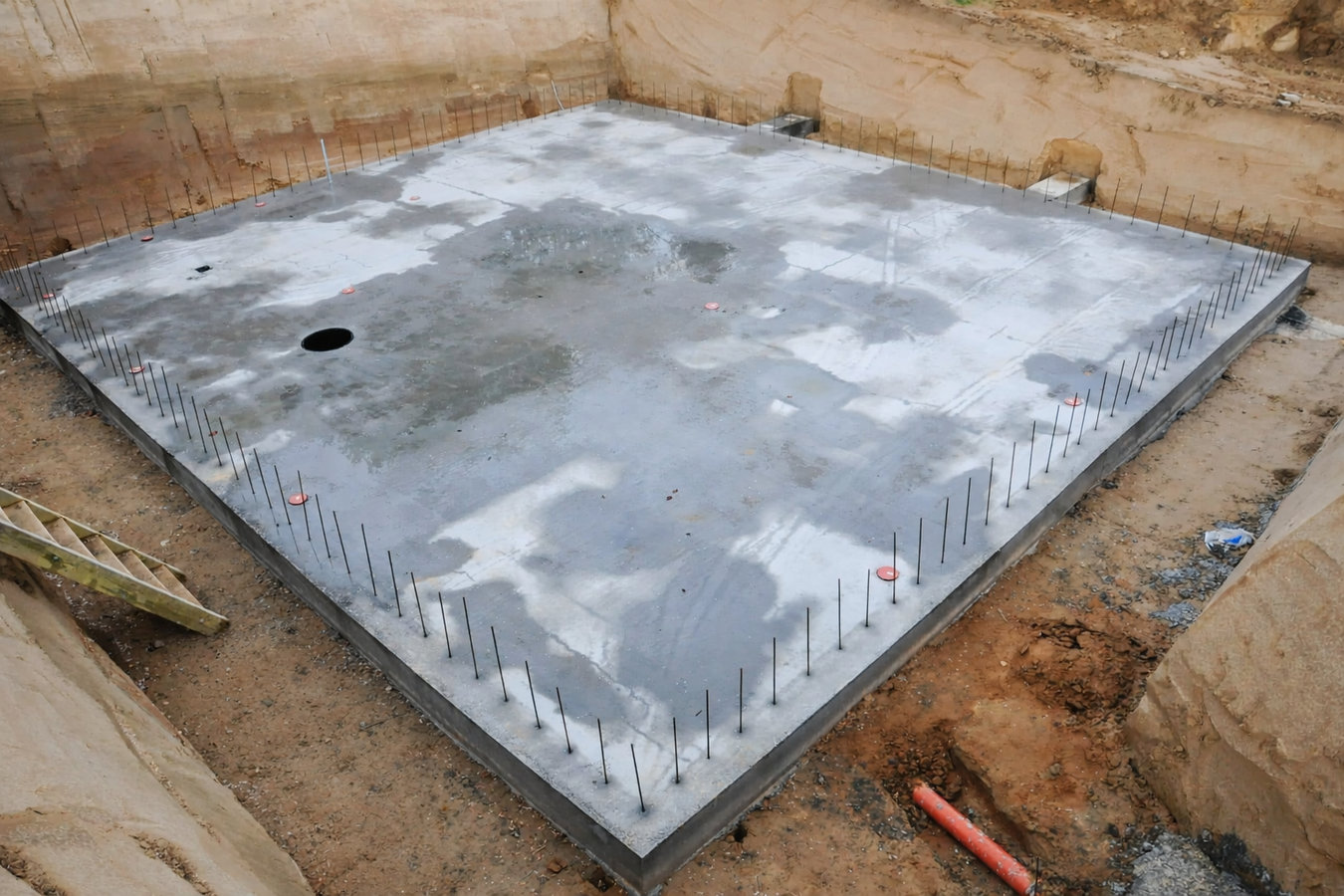
Mount Vernon's clay-heavy Skagit Valley soils stay wet for months at a time, which puts ongoing stress on any foundation that was not designed and drained correctly. New construction and additions here need foundations built with waterproofing, perimeter drainage, and the seismic reinforcement requirements of western Washington. See the full details on our foundation installation service page.
Many homes in Mount Vernon's older downtown neighborhoods and near the Skagit River were built before 1970, and their original driveways have had five-plus decades of freeze-thaw cycling in a wet climate. Cracked, heaved flatwork that drains toward the house instead of away from it is the most common driveway problem we see here, and a new pour built to current thickness and drainage standards solves it for good.
Mount Vernon gets rain for most of the year, and an unpaved backyard is wet and unusable for six months straight. A broom-finished concrete patio on a properly prepared base gives you a safe outdoor surface through the dry season - and unlike a wood deck in this climate, it does not rot, warp, or grow moss in ways that make it a slip hazard.
The hillside neighborhoods on Mount Vernon's south and east sides - and some older properties near the river - deal with grade changes that require retaining walls to prevent soil from moving. Clay soil that is wet for months at a time builds up hydrostatic pressure behind any wall that lacks adequate drainage, and that pressure is what causes walls to bow and fail over time.
Mount Vernon's newer subdivisions on the south side near College Way and toward the foothills are a common location for garage additions and accessory structures that need new slab foundations. Flat, newer lots in these areas can be good candidates for slab construction when base preparation accounts for the clay subsoil common across the valley.
Sidewalks in Mount Vernon's established neighborhoods crack and heave over time as the clay soil below expands and contracts with the seasons. Replacement sidewalks built on a compacted gravel base drain better and stay level longer than repaired old sections - and they meet current city standards for width and slope that older sidewalks often do not.
Mount Vernon is the county seat of Skagit County and the largest city in the valley, with a population of about 36,000. The city averages around 35 inches of rain per year, with the heaviest rainfall running from October through April. What makes Mount Vernon's conditions particularly demanding for concrete work is the combination of persistent moisture and clay-heavy soil. According to USDA soil survey data for the Skagit Valley, much of the soil in this area has significant clay content - clay holds water rather than draining it, which means the ground around foundations and beneath flatwork stays saturated for long stretches. That wet soil expands when wet and shrinks when dry, putting ongoing stress on any concrete that sits on it. A contractor who does not account for this in base preparation, drainage design, and mix selection is setting up problems that will show within a few years.
The housing stock in Mount Vernon spans a wide range. The neighborhoods closest to downtown and the Skagit River contain some of the oldest homes in the city - many built before 1960, with foundations that have been through decades of wet winters, original concrete flatwork that was never designed for today's drainage standards, and deferred maintenance that shows in cracked driveways and heaving sidewalks. The south side of the city near College Way and the east side toward the foothills have seen more development since the 1980s, and those newer homes tend to present different challenges: driveway wear, patio installation, and the occasional garage addition or ADU that needs a new foundation. Both types of properties need a contractor who understands which approach fits which situation, rather than a one-size-fits-all method.
Foundation and concrete permits in Mount Vernon go through the City of Mount Vernon's building department, and we pull them directly on behalf of every customer. Foundation work always requires a permit and a post-pour inspection, and we build the permit lead time into the project schedule from the start - so the timeline we give you is based on how the city actually processes applications, not a best-case estimate.
On the ground in Mount Vernon, we know the city's geography: the older streets near the Lincoln Theatre in downtown, the lower-lying neighborhoods along the Skagit River where drainage is always part of the design conversation, the newer subdivisions off College Way on the south side, and the properties on the hillier east side where retaining walls and sloped driveways are common. The city runs along the I-5 corridor and State Route 536, with most of the established residential neighborhoods between downtown and the foothills.
We regularly serve the surrounding communities too. If your project is in Burlington, just north of Mount Vernon on I-5, we cover that area and know its flat-terrain drainage conditions well. We also serve Anacortesto the west, where the work takes on different characteristics because of coastal exposure and island topography.
Call or message us and we reply within one business day. Tell us what you want to build or fix, roughly how large the area is, and where in Mount Vernon the property is located. You do not need drawings or detailed specs to start the conversation.
We visit the site before giving you a firm price. Mount Vernon's soil and drainage conditions vary by neighborhood, and foundation pricing in particular depends on what we see when we walk the lot. We address cost directly at this stage so you understand what drives the number and there are no surprises when the invoice arrives.
We pull the building permit from the City of Mount Vernon - you do not have to manage the process. Once approved, the crew excavates, prepares the base, sets forms and reinforcement, and pours. Foundation work also requires us to install waterproofing and drainage before backfilling. You do not need to be on-site every day, but we communicate at each stage.
The city inspects the work before we backfill or cover the foundation. After curing - typically a week before significant loading, with full strength at about 28 days - we walk you through the finished project, explain what to keep clear of any drainage outlets, and hand over your permit and inspection paperwork.
We serve all of Mount Vernon and the surrounding Skagit Valley. Replies within one business day.
(360) 299-5624Mount Vernon is the county seat of Skagit County, with a population of about 36,000 people. It sits along the Skagit River between Bellingham to the north and the Seattle metro area to the south, making it a working city rather than a commuter suburb - most residents work locally, with major employers including Skagit Valley Hospital and businesses tied to agriculture and food processing. The city has a genuine historic downtown, anchored by the restored Lincoln Theatre, a 1926 movie house that serves as a community arts venue and one of the most recognized landmarks in the city. The neighborhoods closest to downtown and the river contain many of the city's oldest homes - single-family properties built before 1970 on modest lots, with wood-frame construction and original flatwork that reflects its age.
The south side of Mount Vernon near College Way and the east side toward the foothills have seen more residential development since the 1980s, with larger homes, two-car garages, and more modern construction. Mount Vernon is also the gateway to the Skagit Valley Tulip Festival, which draws visitors to the surrounding farmland every April - locals plan their spring projects around it. For concrete work, the dry months of June through September are the most reliable window. We also serve the communities directly surrounding Mount Vernon, including Sedro-Woolley to the east and Burlington to the north, where we work regularly on the flat Skagit Valley properties that share the same soil and drainage conditions.
Durable concrete driveways designed and poured for lasting curb appeal.
Learn moreCustom concrete patios built to extend your outdoor living space.
Learn moreDecorative stamped concrete mimicking stone, brick, or tile patterns.
Learn moreSafe, ADA-compliant concrete sidewalks for residential and commercial sites.
Learn moreSmooth, sealed concrete garage floors built to handle heavy use.
Learn moreStained and textured finishes that transform plain concrete into a design feature.
Learn moreStructural retaining walls that manage grade changes and prevent erosion.
Learn moreInterior and exterior concrete floors installed level and finished to spec.
Learn moreSlip-resistant, attractive pool decks poured to complement your backyard.
Learn moreSolid concrete steps and stoops built for safety and long-term durability.
Learn moreEngineered slab foundations poured correctly the first time.
Learn moreFull foundation installation services for new residential and commercial builds.
Learn moreCommercial concrete parking lots designed for high traffic and longevity.
Learn morePrecisely poured footings providing a stable base for any structure.
Learn moreFoundation leveling and raising to correct settlement and restore structural integrity.
Learn morePrecision concrete cutting for expansion joints, repairs, and modifications.
Learn moreWe serve all of Mount Vernon and the Skagit Valley. We reply within one business day and handle permits directly with the city.